
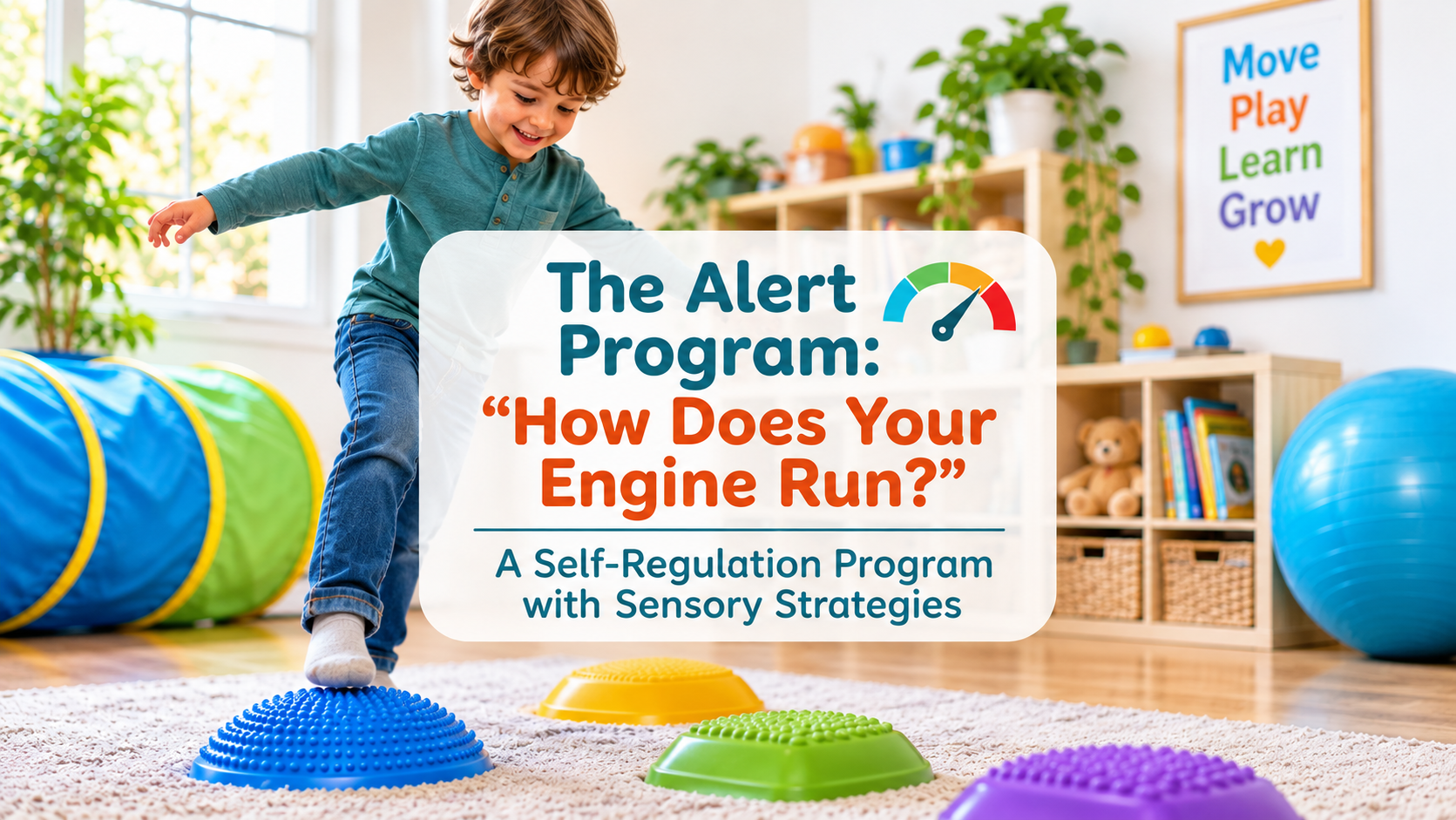
Ever feel like your child goes from zero to sixty in seconds—or drags their feet so slowly they can barely get their shoes on?
If you’ve ever wished for a simple way to help your child understand their own big feelings, energy levels, and focus, you aren't alone. Parenting is a constant dance of helping kids manage their bodies and minds.
There’s a playful occupational therapy approach called The Alert Program® that uses a concept kids naturally love: comparing the human body to a car engine! 🚗
Here is a simple, parent-friendly breakdown of how this car-engine framework works, why it helps kids learn self-regulation, and how you can use it at home.
Why the "Car Engine" Metaphor Works:
Kids love cars, trucks, and things that go! By comparing the body to a car engine, children can talk about their energy and focus without feeling like they are in trouble. Instead of telling a child to "sit still and pay attention" (a traditional "top-down" verbal reminder that often causes frustration), this approach teaches kids to tune into what their body is physically feeling (a "bottom-up" sensory approach).
Just like a car, our bodies have different speeds:
🔴 High: Running too fast, revved up, overwhelmed, or hyperactive.
🟢 Just Right: Calm, focused, and ready to learn or play.
🔵 Low: Sluggish, tired, or running on empty.
The best part? Shifting speeds is totally normal. Our engines are supposed to change throughout the day depending on what we are doing!
The 5 Ways We Can Change Our Engine Speed:
How do we help kids get their engine speed to match the task they need to do or the environment that they are in? We use sensory strategies! There are 5 main categories you can explore through play:
Oral: Putting something in the mouth (like chewing on a crunchy snack, crunching carrots, sipping a smoothie through a straw, or chewing a sensory necklace).
Move: Moving the body! This includes heavy work (pushing, pulling, carrying), jumping and crashing, linear back-and-forth movement, spinning, or going upside down.
Hands/Touch: Fidgeting with a toy, playing with playdough, or touching different textures.
Eyes/Look: Changing visual environments, dimming lights, or looking at calming patterns.
Ears/Listen: Listening to upbeat music to wake up or soft, quiet sounds to calm down.
Step-by-Step: The 3 Stages of Learning Engine Speeds
Children (from pre-K all the way through the teen years and adulthood) learn these skills in three gentle, natural stages:
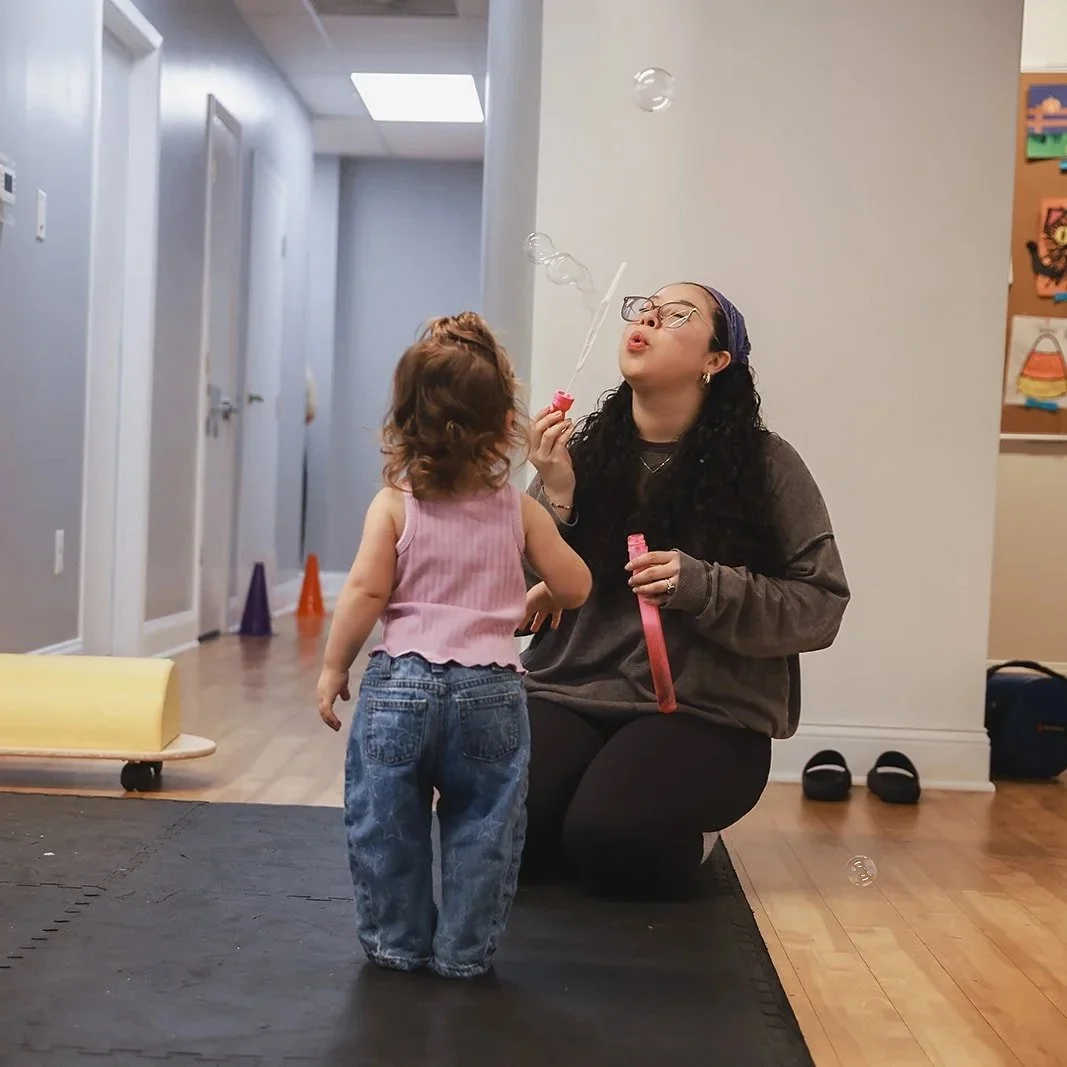
Stage 1: Identifying Engine Speeds
Adult Modeling First: Before kids can spot their own feelings, adults need to lead the way. Parents and teachers start labeling their own engine levels out loud. (e.g., "My engine is running a little high right now because it's noisy in here, I need to take a deep breath.")
Building Awareness: Using fun charts, pictures (you can even use favorite themes like dinosaurs or race cars!), and checklists, children start connecting the physical feeling inside their bodies to the words High, Just Right, or Low.
Stage 2: Experimenting with Methods
Once kids can recognize their engine speed, it’s time to experiment!
Kids explore different sensorimotor tools and strategies to see what helps them feel better.
Note for Parents: Adults need to first understand their own sensory preferences. If you hate loud noises or love deep pressure, knowing your own style helps you guide your child. Every child has unique preferences—what calms one child might rev up another!
Stage 3: Regulating Independently
In this final stage, children start choosing and using strategies independently at home, at school, and out in the world—even when choices are limited.
Parent Reminder: Little kids (under age 8) are usually still mastering Stage One and Two! There is zero rush. Every child learns at their own pace.
Quick Tips for Parents to Try Today
Model it out loud: Narrate your own energy shifts. "Hmm, my engine is feeling a bit low. I think I need to grab a cold glass of water to rev it up!"
Incorporate "Heavy Work": If your child is bouncing off the walls (High Engine), try heavy work like pushing a laundry basket, doing animal walks, or giving a big bear hug to help calm their nervous system down to "Just Right."
Keep it playful: Use stickers, drawings of cars or animals, and fun choices rather than rules.
By teaching kids to view their bodies like an engine, we take away the shame of big behaviors and replace it with curiosity, self-awareness, and lifelong regulation skills!